"The sizing worksheet made it easier to explain battery autonomy and inverter surge limits to the homeowner before procurement."
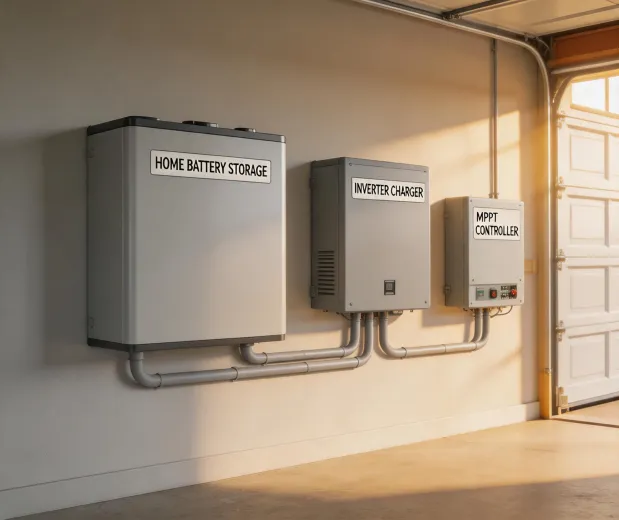
Plan residential backup, off-grid cabins, marine power, RV systems and light commercial solar with plain-language sizing help, installer-ready product notes and monitoring advice that respects real site constraints.
Victron Energy buyers often arrive with a mix of battery, inverter, solar controller and monitoring questions. These quick notes help separate what matters from what only sounds urgent.
An inverter charger is usually the practical choice when battery backup, shore power, generator input or grid charging must be coordinated. A simple inverter can fit smaller DC-to-AC needs, but it will not manage charging logic or transfer behavior.
Start with PV open-circuit voltage at the coldest expected temperature, then confirm array current and battery voltage. This avoids exceeding controller input limits while still keeping useful harvest in cloudy or shoulder-season conditions.
No. LiFePO4, AGM and flooded batteries need different absorption voltage, float behavior, temperature compensation and BMS coordination. Matching the profile protects cycle life and reduces nuisance alarms.
At minimum, use a battery monitor that shows state of charge, current and history. For larger homes, boats or remote cabins, a gateway with alarm notifications and firmware visibility is often worth more than extra hardware capacity.
Share the load list, battery bank voltage, PV module count, expected autonomy, generator details, AC service size and environmental conditions. A clear note can prevent multiple rounds of product swapping.
No responsible design should promise a fixed payback. Battery value depends on local tariffs, backup needs, incentives, cycling strategy and installation cost. We frame ROI as a range, not a guarantee.
Estimate usable kWh, surge load and reserve time before selecting inverter capacity.
Check PV strings against controller limits, battery voltage and seasonal temperature swings.
Plan battery shunt, gateway, alarms and remote access while the wiring plan is still flexible.
Translate product choices into a clear equipment list, settings checklist and commissioning sequence.
| Parameter | Planning value |
|---|---|
| Usable capacity | 2.5-30 kWh residential and mobile banks |
| Chemistry | LiFePO4 or AGM, with charge profile selected per battery type |
| Cycle target | LiFePO4 options commonly planned around 3,000-6,000 cycles depending on DoD |
| Parameter | Planning value |
|---|---|
| AC output | 120 V or 230 V configurations, selected by region and load panel |
| Transfer logic | Grid, generator or shore input with battery charging coordination |
| THD target | Pure sine wave output suitable for sensitive electronics |
| Parameter | Planning value |
|---|---|
| PV input | Model-specific voltage window verified against cold Voc |
| Battery voltage | 12 V, 24 V and 48 V banks supported by matched controller families |
| Monitoring | Bluetooth or gateway-connected status for harvest, alarms and history |
"The sizing worksheet made it easier to explain battery autonomy and inverter surge limits to the homeowner before procurement."
"We needed a clear MPPT and battery monitor plan for mixed shore and solar charging. The handoff notes reduced rework at commissioning."
"The team helped us compare LiFePO4 and AGM options without pretending every site has the same budget or service access."
The fastest review includes battery voltage, daily kWh use, peak AC load, PV module count, preferred chemistry, grid or generator details and whether remote monitoring must be included.
Share the known details today. An advisor can help identify the missing assumptions before your installer, electrician or procurement team locks the bill of materials.